跳转至

Chapter1: Introduction

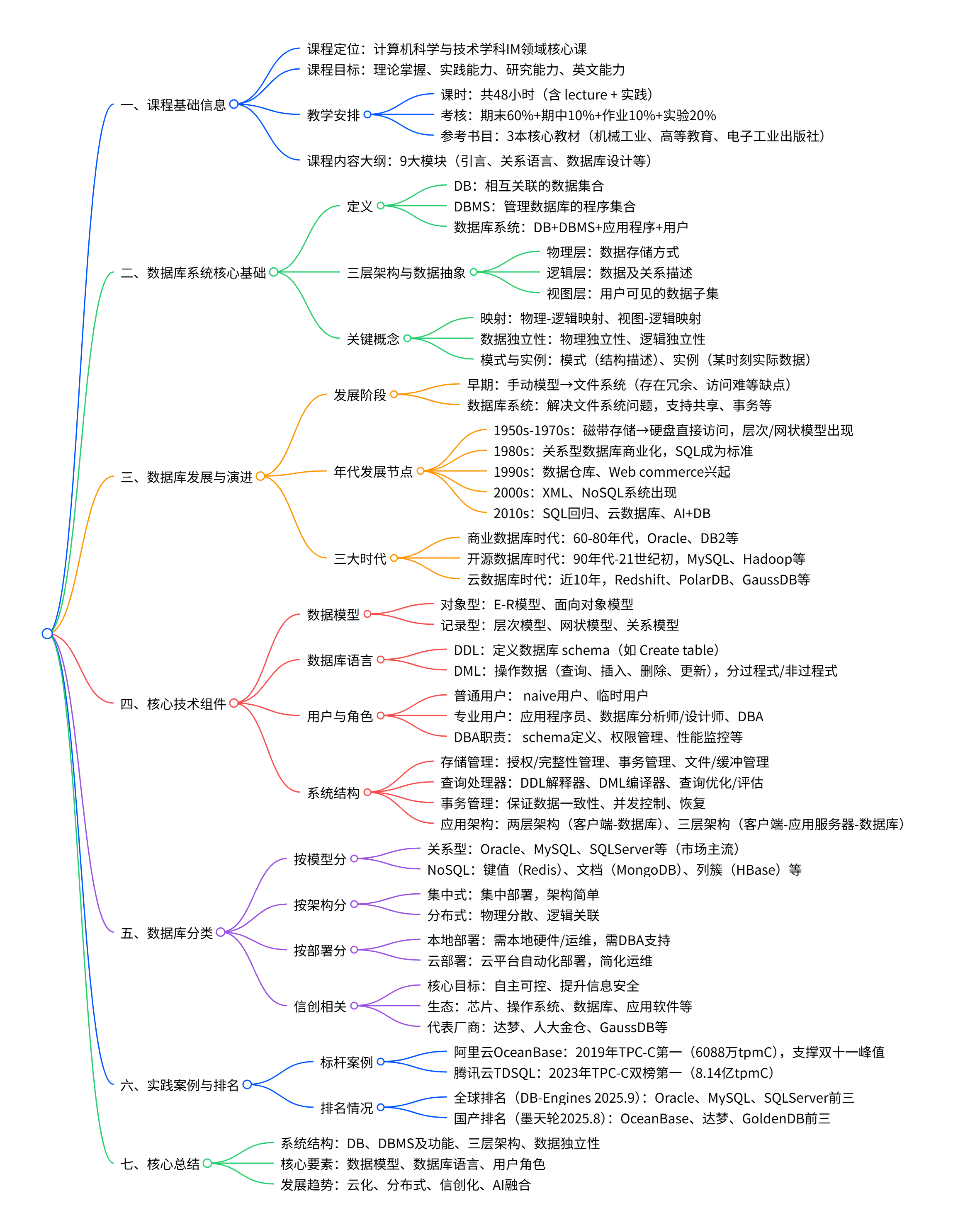
思维导图

exported_image.png

数据库系统历史(History of Database Systems)

  • 数据管理的发展
  • 手动模式(Manual Model):应用程序直接访问独立的数据集,如Data Set1、Data Set2等。
  • 文件系统(File System):引入文件系统管理数据,但应用程序仍需访问多个独立的数据集。
  • 文件系统的缺点
  • 数据冗余和不一致(Data redundancy and inconsistency):多文件格式、信息重复。
  • 数据访问困难(Difficulty in accessing data):需要为每个新任务编写新程序。
  • 数据隔离(Data isolation):多文件和格式导致数据隔离。
  • 完整性问题(Integrity problems):完整性约束嵌入程序代码,难以添加或更改新约束(如账户余额>0)。
  • 更新原子性(Atomicity of updates):更新操作缺乏原子性。
  • 多用户并发访问(Concurrent access by multiple users):并发访问可能导致异常。
  • 安全问题(Security problems):缺乏有效安全控制。
  • 数据库系统(Database System)
  • 使用DBMS(DataBase Management System)管理共享数据库,应用程序通过DBMS访问数据,实现集中管理。
  • 数据库方法的优势
  • 数据共享(Data can be shared):允许多个应用程序共享数据。
  • 减少冗余(Redundancy can be reduced):减少数据重复存储。
  • 避免不一致(Inconsistency can be avoided):在一定程度上避免数据不一致。
  • 提供事务支持(Transaction support can be provided):支持事务处理。
  • 维护完整性(Integrity can be maintained):确保数据完整性。
  • 强制安全(Security can be enforced):实施安全机制。
  • 数据库系统 vs 文件系统
  • 早期(1950s-early 1960s):使用磁带存储数据,穿孔卡输入,数据处理依赖磁带。
  • 晚期(Late 1960s-1970s):硬盘允许直接访问数据,网络和层次数据模型广泛使用,Ted Codd定义关系数据模型(获ACM Turing Award),IBM System R原型、UC Berkeley Ingres原型,高性能事务处理。
  • 1980s:研究关系原型演变为商业系统,SQL成为行业标准,并行和分布式数据库系统,面向对象数据库系统。
  • 1990s:大型决策支持和数据挖掘应用,多TB级数据仓库,网络商务兴起。
  • 2000s:XML和XQuery标准,大数据存储系统(如Google BigTable、Yahoo PNuts、Amazon),NoSQL系统,大数据分析(MapReduce等)。
  • 2010s:SQL重载(SQL前端用于MapReduce系统),海量并行数据库系统,多核主内存数据库。
  • 关键里程碑
  • 1968:IBM IMS(Information Management System),层次数据模型。
  • 1970s:Cullinet Software’s IDMS,CODASYL报告(1971),网络数据模型。
  • 1970:E.F. Codd定义关系模型。
  • 1990s:对象-关系数据库、WEB数据库、并行数据库。
  • 2000s:NoSQL。
  • 2010s:云数据库、AI+DB。
  • 数据库的三个时代
  • 商业数据库时代(60s-80s):60年代网状和层次数据库;70年代关系型数据库成为主流;80年代交易型数据库成熟(如Oracle、DB2、SQLServer),以大型机、小型机和商业存储为基础设施。
  • 开源数据库时代(90s-早21世纪):移动互联网爆发,NoSQL兴起,以MySQL、PostgreSQL、Hadoop、Redis等为代表,倡导开源自由。
  • 云数据库时代(近10年):云技术发展,数据库自动化部署运维(如亚马逊Redshift和Aurora、阿里云PolarDB、华为云GaussDB、腾讯云TDSQL),加速业务上线,中国数据库登上历史舞台。

什么是数据库系统(What is Database Systems)

  • DBMS:数据库管理系统(DataBase Management System),提供数据存储、管理和访问的软件。
  • DB:数据库(Database),一组相互关联的数据集合(a collection of interrelated data),包含特定企业的信息。
  • Applications:访问数据的程序集(Set of programs to access the data)。
  • 整体定义:DBMS 包含特定企业的信息,包括相互关联的数据集合、访问数据的程序集,以及提供便利且高效的使用环境(An environment that is both convenient and efficient to use)。
  • Collection of interrelated data
  • Set of program to access the data
  • An environment that is both convenient and efficient to use
  • 数据库应用示例(Database Applications):
  • 银行(Banking):所有交易(all transactions)。
  • 航空(Airlines):预订、调度(reservations, schedules)。
  • 大学(Universities):注册、成绩(registration, grades)。
  • 销售(Sales):客户、产品、采购(customers, products, purchases)。
  • 制造(Manufacturing):生产、库存、订单、供应链(production, inventory, orders, supply chain)。
  • 人力资源(Human resources):员工记录、薪资、税扣(employee records, salaries, tax deductions)。
  • 数据库触及我们生活的各方面(Databases touch all aspects of our lives)。

三级结构与数据抽象(Three Levels and Data Abstraction)

  • 三级架构(Three-level Architecture)
  • 物理级(Physical level):描述记录如何物理存储(如客户记录的存储方式)。
  • 逻辑级(Logical level):描述数据库中存储的数据及其关系(如客户记录的类型定义,包括customer_id、customer_name等字段)。
  • 视图级(View level):整个数据库的一部分,隐藏数据类型细节,并可隐藏信息(如员工薪资)以确保安全;包括社区用户视图、部分数据库和个人用户视图。
  • 数据抽象(Data Abstraction)
  • 视图抽象(View abstraction):隐藏整个数据库的部分细节。
  • 逻辑抽象(Logical abstraction):描述逻辑数据及其关系。
  • 物理抽象(Physical abstraction):描述物理存储方式。
  • 映象(Mappings)
  • 物理(内部)/逻辑(概念)映象(Physical(internal)/Logical(conceptual) mapping):定义逻辑视图与存储数据库的对应关系,指定逻辑记录和字段在物理级的表示。
  • 视图(外部)/逻辑(概念)映象(View(external)/Logical(conceptual) mapping):定义特定视图与逻辑视图的对应关系。
  • 数据独立性(Data Independence)
  • 物理数据独立性(Physical Data Independence):修改物理模式而不改变逻辑模式或视图的能力(通过物理/逻辑映象)。
  • 逻辑数据独立性(Logical Data Independence):修改逻辑模式而不改变视图的能力(通过视图/逻辑映象)。
  • 应用:如果物理模式变化,应用程序无需重写;逻辑模式变化时,视图保持不变。
  • 数据库系统的体系结构
  • 包括外模式(External Schema,如外模式A、B)、概念模式(Conceptual Schema)、内模式(Internal Schema)。
  • 映象:外模式/模式映象、模式/内模式映象。
  • 由数据库管理员(DBA)建立和维护,涉及主语言+DML的用户交互、操作系统(OS)和DBMS。
  • 实例与模式(Instances and Schemas)
  • 模式(Schema):数据库数据结构的描述(如客户和账户的信息及其关系),类似于程序中变量的类型信息;包括物理模式(物理级设计)和逻辑模式(逻辑级设计)。
  • 实例(Instance):数据库在特定时间点的实际内容,类似于程序中变量的值。

数据模型(Data Models)

  • 定义
  • 一组用于描述数据、数据关系、数据语义和一致性约束的概念工具(A collection of conceptual tools for describing data, data relationships, data semantics, and consistency constrains)。
  • 组成部分
  • 数据结构(Data Structure)。
  • 数据操作(Data Operations)。
  • 约束规则(Constraint Rules)。
  • 类型
  • 基于对象的模型(Object_based data model):
    • 实体-关系模型(Entity-Relational Model (E_R Model))。
    • 面向对象模型(Object-oriented Model)。
  • 基于记录的模型(Record_based data model):
    • 层次数据模型(hierarchical data model)。
    • 网络数据模型(network data model)。
    • 关系数据模型(relational data model)。
  • 关系数据模型示例(Relational Data Model)
  • 以表格形式表示,包括字段如customer-name、Customer-id、customer-street、customer-city、account-number。
  • 示例数据:客户如Johnson、Smith等,地址和账户号等信息,展示关系表的结构。

数据库语言(Database Languages)

  • 数据定义语言(DDL)
  • 用于定义数据库模式的规范表示法(Specification notation for defining the database schema)。
  • 示例:Create table account (account-number char(10), balance integer)。
  • 包括:数据库模式(Database schema),数据存储和定义语言(Data storage and definition language)。
  • 数据操纵语言(DML)
  • 用于访问和操纵由适当数据模型组织的数据的语言(Language for accessing and manipulating the data organized by the appropriate data model)。
  • 操作:查询(query)、插入(insert)、删除(delete)、更新(update)。
  • 也称为查询语言(DML also known as query language)。
  • 两种类型:
    • 过程式(Procedural):用户指定所需数据以及如何获取这些数据(user specifies what data is required and how to get those data)。
    • 非过程式(Nonprocedural):用户指定所需数据而不指定如何获取(user specifies what data is required without specifying how to get those data)。
  • SQL 是最广泛使用的查询语言(SQL is the most widely used query language)。

数据库用户(Database Users)

  • 用户分类
  • 根据他们期望与系统交互的方式区分(Users are differentiated by the way they expect to interact with the system)。
  • 具体类型
  • 应用程式员(Application programmers):通过DML调用与系统交互(interact with system through DML calls)。
  • 高级用户(Sophisticated users):使用数据库查询语言形成请求(form requests in a database query language)。
  • 专业用户(Specialized users):编写不适合传统数据处理框架的专用数据库应用(write specialized database applications that do not fit into the traditional data processing framework)。
  • 初级用户(Naive users):调用先前编写好的永久应用程式(invoke one of the permanent application programs that have been written previously),例如网络访问数据库的人、银行出纳员、文职人员(E.g. people accessing database over the web, bank tellers, clerical staff)。
  • 终端用户(End Users)
  • 初级用户(naive Users)。
  • 临时用户(casual users):交互式SQL(-----Interactive SQL)。
  • 应用程式员(Application Programmers):过程式SQL、事务(-----Procedural SQL,Transaction)。
  • 数据库分析员和设计师(Database analyzer and designer):数据建模、规范化理论(-----Data modeling, Normalization theory)。
  • 数据库管理员(Database Administrators, DBA):数据库维护、安全、完整性、恢复(-----Database maintenance, Security, Integrity,Recovery)。
  • 数据库管理系统设计师和实现者(Database Management System designer and implementer):上述技术的实现技术,用于特殊和新数据库管理系统(-----Implementation technique of above techniques for Special and New Database Management System)。
  • 数据库管理员职责(Database Administrator)
  • 协调数据库系统的所有活动;对企业的信息资源和需求有良好理解(Coordinates all the activities of the database system; the database administrator has a good understanding of the enterprise’s information resources and needs)。
  • 职责包括:
    • 模式定义(Schema definition)。
    • 存储结构和访问方法定义(Storage structure and access method definition)。
    • 模式和物理组织修改(Schema and physical organization modification)。
    • 授予用户访问数据库的权限(Granting user authority to access the database)。
    • 指定完整性约束(Specifying integrity constraints)。
    • 作为与用户的联络人(Acting as liaison with users)。
    • 监控性能并响应需求变化(Monitoring performance and responding to changes in requirements)。

数据库系统结构(Database System Structure)

  • 存储管理(Storage Management)
  • 存储管理器是一个程序模块,提供低级数据与应用程式和查询之间的接口(Storage manager is a program module that provides the interface between the low-level data stored in the database and the application programs and queries submitted to the system)。
  • 负责数据的有效存储、检索和更新(is responsible for efficient storing, retrieving and updating of data)。
  • 组件包括:
    • 授权和完整性管理器(Authorization and integrity manager)。
    • 事务管理器(Transaction manager)。
    • 文件管理器(File manager)。
    • 缓冲管理器(Buffer manager)。
  • 数据结构(Data Structure):数据文件(Data files);数据字典(Data dictionary);索引(Indices)。
  • 查询处理器(Query Processor)
  • DDL解释器(DDL interpreter)。
  • DML编译器(DML compiler)。
  • 查询优化(Query optimization)。
  • 查询评估引擎(Query evaluation engine)。
  • 事务管理(Transaction Management)
  • 事务是一个执行单一逻辑功能的操作集合(A transaction is a collection of operations that performs a single logical function in a database application)。
  • 事务管理组件确保数据库保持一致(正确)状态(Transaction-management component ensures that the database remains in a consistent (correct) state)。
  • 并发控制管理器控制并发事务之间的交互,以确保数据库一致性(Concurrency-control manager controls the interaction among the concurrent transactions, to ensure the consistency of the database)。
  • DBMS的功能(Functions of DBMS)
  • 数据定义和存储管理(Data Definition and storage management)。
  • 数据操纵、数据访问(Data Manipulation, Data Access)。
  • 数据安全和完整性(Data Security and integrity)。
  • 事务管理、数据恢复和并发(Transaction management, Data recovery and concurrency)。
  • 数据字典(Data dictionary)。
  • 应用架构(Application Architectures)
  • 二层架构(Two-tier architecture):例如,客户端程式使用ODBC/JDBC与数据库通信(E.g. client programs using ODBC/JDBC to communicate with a database)。
  • 三层架构(Three-tier architecture):例如,基于Web的应用,以及使用“中间件”构建的应用(E.g. web-based applications, and applications built using “middleware”)。
总结

数据库系统历史(History of Database Systems)

  • 数据管理的发展
  • 手动模式(Manual Model):应用程序直接访问独立的数据集,如Data Set1、Data Set2等。
  • 文件系统(File System):引入文件系统管理数据,但应用程序仍需访问多个独立的数据集。
  • 文件系统的缺点
  • 数据冗余和不一致(Data redundancy and inconsistency):多文件格式、信息重复。
  • 数据访问困难(Difficulty in accessing data):需要为每个新任务编写新程序。
  • 数据隔离(Data isolation):多文件和格式导致数据隔离。
  • 完整性问题(Integrity problems):完整性约束嵌入程序代码,难以添加或更改新约束(如账户余额>0)。
  • 更新原子性(Atomicity of updates):更新操作缺乏原子性。
  • 多用户并发访问(Concurrent access by multiple users):并发访问可能导致异常。
  • 安全问题(Security problems):缺乏有效安全控制。
  • 数据库系统(Database System)
  • 使用DBMS(DataBase Management System)管理共享数据库,应用程序通过DBMS访问数据,实现集中管理。
  • 数据库方法的优势
  • 数据共享(Data can be shared):允许多个应用程序共享数据。
  • 减少冗余(Redundancy can be reduced):减少数据重复存储。
  • 避免不一致(Inconsistency can be avoided):在一定程度上避免数据不一致。
  • 提供事务支持(Transaction support can be provided):支持事务处理。
  • 维护完整性(Integrity can be maintained):确保数据完整性。
  • 强制安全(Security can be enforced):实施安全机制。
  • 数据库系统 vs 文件系统
  • 早期(1950s-early 1960s):使用磁带存储数据,穿孔卡输入,数据处理依赖磁带。
  • 晚期(Late 1960s-1970s):硬盘允许直接访问数据,网络和层次数据模型广泛使用,Ted Codd定义关系数据模型(获ACM Turing Award),IBM System R原型、UC Berkeley Ingres原型,高性能事务处理。
  • 1980s:研究关系原型演变为商业系统,SQL成为行业标准,并行和分布式数据库系统,面向对象数据库系统。
  • 1990s:大型决策支持和数据挖掘应用,多TB级数据仓库,网络商务兴起。
  • 2000s:XML和XQuery标准,大数据存储系统(如Google BigTable、Yahoo PNuts、Amazon),NoSQL系统,大数据分析(MapReduce等)。
  • 2010s:SQL重载(SQL前端用于MapReduce系统),海量并行数据库系统,多核主内存数据库。
  • 关键里程碑
  • 1968:IBM IMS(Information Management System),层次数据模型。
  • 1970s:Cullinet Software’s IDMS,CODASYL报告(1971),网络数据模型。
  • 1970:E.F. Codd定义关系模型。
  • 1990s:对象-关系数据库、WEB数据库、并行数据库。
  • 2000s:NoSQL。
  • 2010s:云数据库、AI+DB。
  • 数据库的三个时代
  • 商业数据库时代(60s-80s):60年代网状和层次数据库;70年代关系型数据库成为主流;80年代交易型数据库成熟(如Oracle、DB2、SQLServer),以大型机、小型机和商业存储为基础设施。
  • 开源数据库时代(90s-早21世纪):移动互联网爆发,NoSQL兴起,以MySQL、PostgreSQL、Hadoop、Redis等为代表,倡导开源自由。
  • 云数据库时代(近10年):云技术发展,数据库自动化部署运维(如亚马逊Redshift和Aurora、阿里云PolarDB、华为云GaussDB、腾讯云TDSQL),加速业务上线,中国数据库登上历史舞台。

什么是数据库系统(What is Database Systems)

  • DBMS:数据库管理系统(DataBase Management System),提供数据存储、管理和访问的软件。
  • DB:数据库(Database),一组相互关联的数据集合(a collection of interrelated data),包含特定企业的信息。
  • Applications:访问数据的程序集(Set of programs to access the data)。
  • 整体定义:DBMS 包含特定企业的信息,包括相互关联的数据集合、访问数据的程序集,以及提供便利且高效的使用环境(An environment that is both convenient and efficient to use)。
  • 数据库应用示例(Database Applications)
  • 银行(Banking):所有交易(all transactions)。
  • 航空(Airlines):预订、调度(reservations, schedules)。
  • 大学(Universities):注册、成绩(registration, grades)。
  • 销售(Sales):客户、产品、采购(customers, products, purchases)。
  • 制造(Manufacturing):生产、库存、订单、供应链(production, inventory, orders, supply chain)。
  • 人力资源(Human resources):员工记录、薪资、税扣(employee records, salaries, tax deductions)。
  • 数据库触及我们生活的各方面(Databases touch all aspects of our lives)。

三级结构与数据抽象(Three Levels and Data Abstraction)

  • 三级架构(Three-level Architecture)
  • 物理级(Physical level):描述记录如何物理存储(如客户记录的存储方式)。
  • 逻辑级(Logical level):描述数据库中存储的数据及其关系(如客户记录的类型定义,包括customer_id、customer_name等字段)。
  • 视图级(View level):整个数据库的一部分,隐藏数据类型细节,并可隐藏信息(如员工薪资)以确保安全;包括社区用户视图、部分数据库和个人用户视图。
  • 数据抽象(Data Abstraction)
  • 视图抽象(View abstraction):隐藏整个数据库的部分细节。
  • 逻辑抽象(Logical abstraction):描述逻辑数据及其关系。
  • 物理抽象(Physical abstraction):描述物理存储方式。
  • 映象(Mappings)
  • 物理(内部)/逻辑(概念)映象(Physical(internal)/Logical(conceptual) mapping):定义逻辑视图与存储数据库的对应关系,指定逻辑记录和字段在物理级的表示。
  • 视图(外部)/逻辑(概念)映象(View(external)/Logical(conceptual) mapping):定义特定视图与逻辑视图的对应关系。
  • 数据独立性(Data Independence)
  • 物理数据独立性(Physical Data Independence):修改物理模式而不改变逻辑模式或视图的能力(通过物理/逻辑映象)。
  • 逻辑数据独立性(Logical Data Independence):修改逻辑模式而不改变视图的能力(通过视图/逻辑映象)。
  • 应用:如果物理模式变化,应用程序无需重写;逻辑模式变化时,视图保持不变。
  • 数据库系统的体系结构
  • 包括外模式(External Schema,如外模式A、B)、概念模式(Conceptual Schema)、内模式(Internal Schema)。
  • 映象:外模式/模式映象、模式/内模式映象。
  • 由数据库管理员(DBA)建立和维护,涉及主语言+DML的用户交互、操作系统(OS)和DBMS。
  • 实例与模式(Instances and Schemas)
  • 模式(Schema):数据库数据结构的描述(如客户和账户的信息及其关系),类似于程序中变量的类型信息;包括物理模式(物理级设计)和逻辑模式(逻辑级设计)。
  • 实例(Instance):数据库在特定时间点的实际内容,类似于程序中变量的值。

数据模型(Data Models)

  • 定义
  • 一组用于描述数据、数据关系、数据语义和一致性约束的概念工具(A collection of conceptual tools for describing data, data relationships, data semantics, and consistency constrains)。
  • 组成部分
  • 数据结构(Data Structure)。
  • 数据操作(Data Operations)。
  • 约束规则(Constraint Rules)。
  • 类型
  • 基于对象的模型(Object_based data model):
    • 实体-关系模型(Entity-Relational Model (E_R Model))。
    • 面向对象模型(Object-oriented Model)。
  • 基于记录的模型(Record_based data model):
    • 层次数据模型(hierarchical data model)。
    • 网络数据模型(network data model)。
    • 关系数据模型(relational data model)。
  • 关系数据模型示例(Relational Data Model)
  • 以表格形式表示,包括字段如customer-name、Customer-id、customer-street、customer-city、account-number。
  • 示例数据:客户如Johnson、Smith等,地址和账户号等信息,展示关系表的结构。

数据库语言(Database Languages)

  • 数据定义语言(DDL)
  • 用于定义数据库模式的规范表示法(Specification notation for defining the database schema)。
  • 示例:Create table account (account-number char(10), balance integer)。
  • 包括:数据库模式(Database schema),数据存储和定义语言(Data storage and definition language)。
  • 数据操纵语言(DML)
  • 用于访问和操纵由适当数据模型组织的数据的语言(Language for accessing and manipulating the data organized by the appropriate data model)。
  • 操作:查询(query)、插入(insert)、删除(delete)、更新(update)。
  • 也称为查询语言(DML also known as query language)。
  • 两种类型:
    • 过程式(Procedural):用户指定所需数据以及如何获取这些数据(user specifies what data is required and how to get those data)。
    • 非过程式(Nonprocedural):用户指定所需数据而不指定如何获取(user specifies what data is required without specifying how to get those data)。
  • SQL 是最广泛使用的查询语言(SQL is the most widely used query language)。

数据库用户(Database Users)

  • 用户分类
  • 根据他们期望与系统交互的方式区分(Users are differentiated by the way they expect to interact with the system)。
  • 具体类型
  • 应用程式员(Application programmers):通过DML调用与系统交互(interact with system through DML calls)。
  • 高级用户(Sophisticated users):使用数据库查询语言形成请求(form requests in a database query language)。
  • 专业用户(Specialized users):编写不适合传统数据处理框架的专用数据库应用(write specialized database applications that do not fit into the traditional data processing framework)。
  • 初级用户(Naive users):调用先前编写好的永久应用程式(invoke one of the permanent application programs that have been written previously),例如网络访问数据库的人、银行出纳员、文职人员(E.g. people accessing database over the web, bank tellers, clerical staff)。
  • 终端用户(End Users)
  • 初级用户(naive Users)。
  • 临时用户(casual users):交互式SQL(-----Interactive SQL)。
  • 应用程式员(Application Programmers):过程式SQL、事务(-----Procedural SQL,Transaction)。
  • 数据库分析员和设计师(Database analyzer and designer):数据建模、规范化理论(-----Data modeling, Normalization theory)。
  • 数据库管理员(Database Administrators, DBA):数据库维护、安全、完整性、恢复(-----Database maintenance, Security, Integrity,Recovery)。
  • 数据库管理系统设计师和实现者(Database Management System designer and implementer):上述技术的实现技术,用于特殊和新数据库管理系统(-----Implementation technique of above techniques for Special and New Database Management System)。
  • 数据库管理员职责(Database Administrator)
  • 协调数据库系统的所有活动;对企业的信息资源和需求有良好理解(Coordinates all the activities of the database system; the database administrator has a good understanding of the enterprise’s information resources and needs)。
  • 职责包括:
    • 模式定义(Schema definition)。
    • 存储结构和访问方法定义(Storage structure and access method definition)。
    • 模式和物理组织修改(Schema and physical organization modification)。
    • 授予用户访问数据库的权限(Granting user authority to access the database)。
    • 指定完整性约束(Specifying integrity constraints)。
    • 作为与用户的联络人(Acting as liaison with users)。
    • 监控性能并响应需求变化(Monitoring performance and responding to changes in requirements)。

数据库系统结构(Database System Structure)

  • 存储管理(Storage Management)
  • 存储管理器是一个程序模块,提供低级数据与应用程式和查询之间的接口(Storage manager is a program module that provides the interface between the low-level data stored in the database and the application programs and queries submitted to the system)。
  • 负责数据的有效存储、检索和更新(is responsible for efficient storing, retrieving and updating of data)。
  • 组件包括:
    • 授权和完整性管理器(Authorization and integrity manager)。
    • 事务管理器(Transaction manager)。
    • 文件管理器(File manager)。
    • 缓冲管理器(Buffer manager)。
  • 数据结构(Data Structure):数据文件(Data files);数据字典(Data dictionary);索引(Indices)。
  • 查询处理器(Query Processor)
  • DDL解释器(DDL interpreter)。
  • DML编译器(DML compiler)。
  • 查询优化(Query optimization)。
  • 查询评估引擎(Query evaluation engine)。
  • 事务管理(Transaction Management)
  • 事务是一个执行单一逻辑功能的操作集合(A transaction is a collection of operations that performs a single logical function in a database application)。
  • 事务管理组件确保数据库保持一致(正确)状态(Transaction-management component ensures that the database remains in a consistent (correct) state)。
  • 并发控制管理器控制并发事务之间的交互,以确保数据库一致性(Concurrency-control manager controls the interaction among the concurrent transactions, to ensure the consistency of the database)。
  • DBMS的功能(Functions of DBMS)
  • 数据定义和存储管理(Data Definition and storage management)。
  • 数据操纵、数据访问(Data Manipulation, Data Access)。
  • 数据安全和完整性(Data Security and integrity)。
  • 事务管理、数据恢复和并发(Transaction management, Data recovery and concurrency)。
  • 数据字典(Data dictionary)。
  • 应用架构(Application Architectures)
  • 二层架构(Two-tier architecture):例如,客户端程式使用ODBC/JDBC与数据库通信(E.g. client programs using ODBC/JDBC to communicate with a database)。
  • 三层架构(Three-tier architecture):例如,基于Web的应用,以及使用“中间件”构建的应用(E.g. web-based applications, and applications built using “middleware”)。

数据库分类(Database Classifications)

  • 从模型看
  • 网状数据库(IDS 1964)。
  • 层次数据库(IMS 1968)。
  • 关系型数据库(市场主流,如Oracle、MySQL、SQLServer、DB2、OpenGauss、OceanBase、PolarDB)。
  • 非关系型数据库(NoSQL):
    • 键值数据库:如Redis,以键值对形式存储。
    • 文档数据库:如MongoDB,以类似JSON的文档格式存储,支持嵌套结构。
    • 列簇式数据库:如HBase,按列存储。
    • 图数据库:如Neo4j,以图结构存储节点和关系。
    • 时序数据库:如InfluxDB,针对时间序列数据设计。
    • 向量数据库:如Milvus,处理向量数据。
  • 从架构看
  • 集中式数据库:数据库集中部署于中心节点,数据存储于本地磁盘或外接设备;部署简单、架构成熟。
  • 分布式数据库:部署于网络中不同计算机,物理分散、逻辑关联,使用者感受不到分布性。
  • 从部署看
  • 本地部署:安装于本地硬件,需要硬件采购、安装部署;需专业DBA或服务厂商维护。
  • 云部署:数据库在云平台自动化部署、运维;共享云基础架构,加速供给和上线,简化运维。
  • 信创(信息技术应用创新)
  • 2016年成立信创工委会,催生信创产业,实现信息技术自主可控,提升信息基础设施安全。
  • 信创产业生态:包括去IOE(国外体系,如Intel处理器、Oracle数据库等)。
  • 数据库信创产业链/企业(部分):如阿里云/淘宝天猫流量洪峰,支持双十一8700万/秒峰值查询。
  • 示例:OceanBase 2019 TPC-C测试第一,每分钟6088万笔订单;腾讯云TDSQL 2023 TPC-C榜首,8.14亿tpmC,性价比第一。
  • 数据库排名:https://db-engines.com/en/ranking;https://www.modb.pro/dbRank;2025年9月数据库排名;2025年8月墨天轮中国数据库流行度排行榜。

总结(Summary)

  • 数据库系统结构
  • DB:数据库。
  • DBMS及其功能(DBMS, DBMS Functions)。
  • 三级结构(Three-level structure)。
  • 数据独立性(Data independence)。
  • 数据模型(Data Model)
  • 数据库语言(Database Languages)
  • 数据库用户(Database Users)
  • 数据增长图表:2009-2019年数据量从400增长到550000(基于UNKNOWN-0.xls图表)。